The AI Accuracy Imperative for Brands
AI can sometimes generate misleading or inaccurate responses when queried about brands and products. Why this is a problem, and what you can do to protect your brand.

Introduction
In the rapidly evolving world of artificial intelligence (AI), the quest for accurate information remains a cornerstone for trust and reliability. Yet, our investigations reveal that platforms like ChatGPT, Gemini, and Copilot, when queried about brand and product information, can sometimes generate misleading or inaccurate responses. This is a critical issue for brands to be aware of, as inaccuracies in product information can greatly damage a brand's perception and credibility, ultimately eroding trust among consumers.
Unveiling AI's Accuracy in Brand Mentions
From December 2023 through April 2024, Purchased used its AI Brand Tracker™ to track 2,659 brand mentions in the daily responses to the prompt "What is the Best Whitening Toothpaste on the Market?" in 7 leading AI platforms: Google's Search Generative Experience (SGE) and Gemini, OpenAI's ChatGPT, Microsoft's Copilot, Anthropic's Claude, Perplexity AI, and You.com. The Purchased AI Brand Tracker looks at AI brand ranking and attributes information in responses, including the ability to automatically identify content sources and verify product information generated by AI. This comprehensive analysis revealed a fascinating landscape of information accuracy:
- We found inaccurate and misleading information for 5 of the top 10 most frequently mentioned whitening toothpaste brands.
- Most inaccuracies and misleading information concerned product ingredients, particularly for Pronamel Gentle Whitening and Sensodyne Extra Whitening brands.
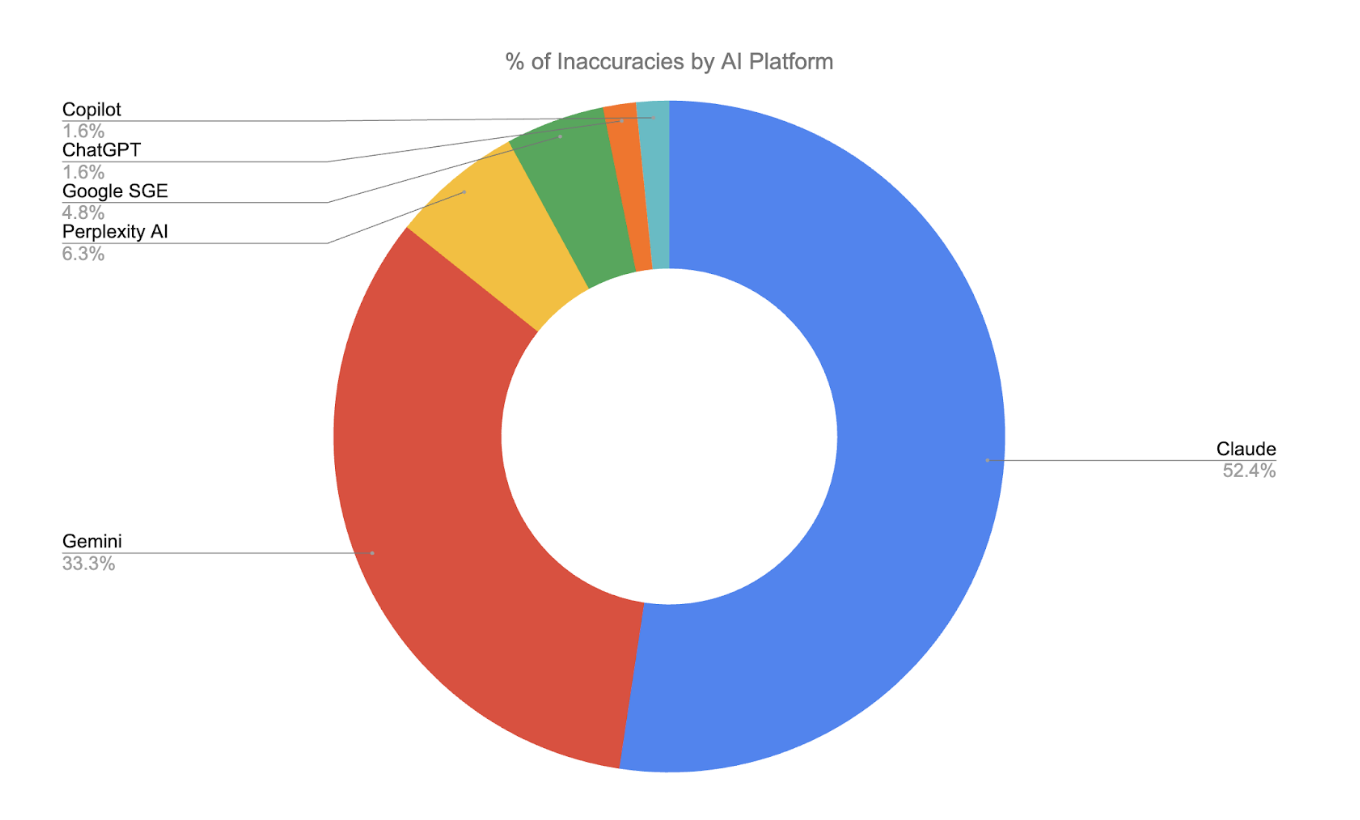
- Inaccuracies were generated on 6 of the 7 leading AI platforms tracked, with the highest percentage found on Claude followed by Gemini and Perplexity AI.
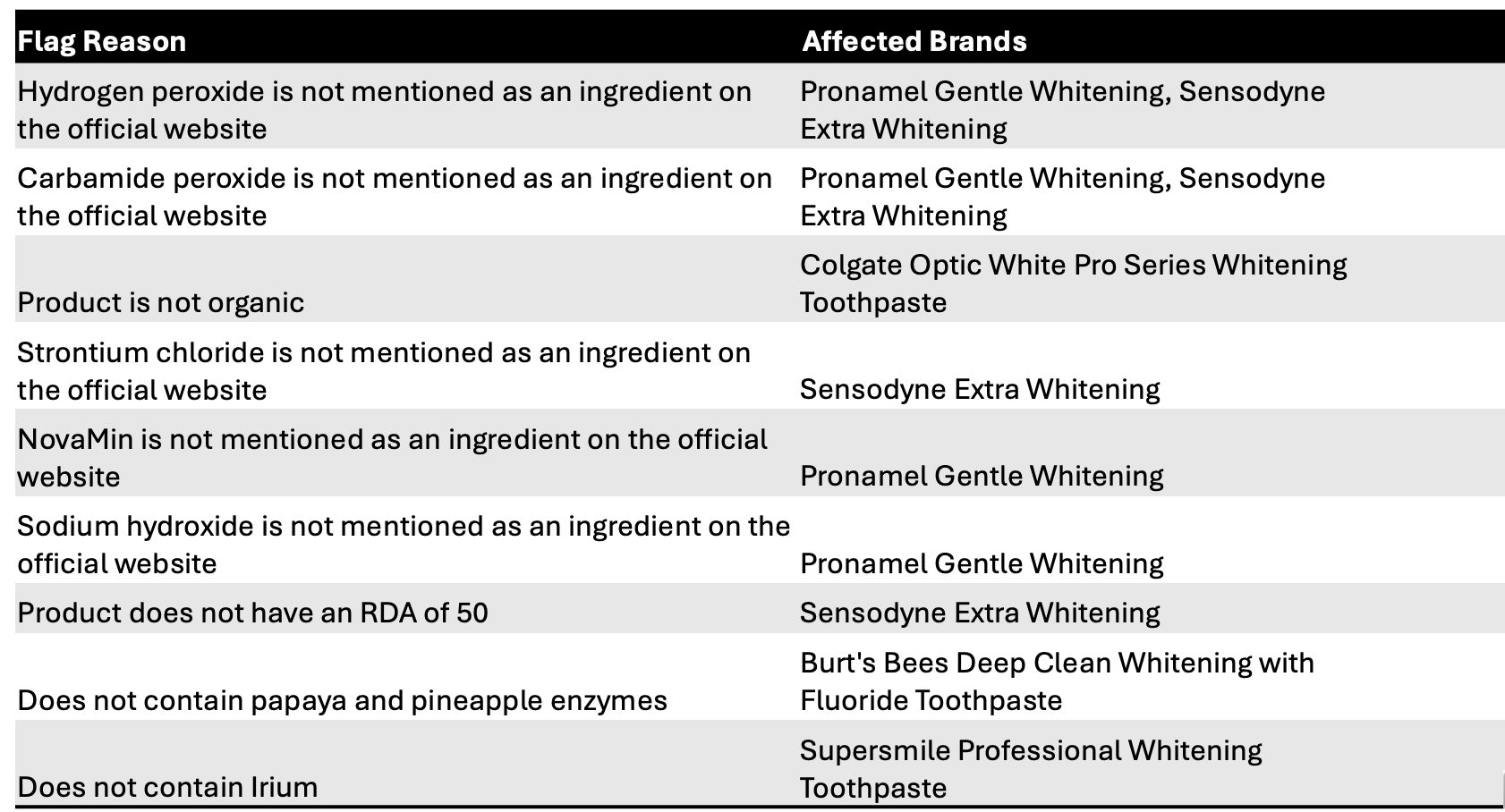
- The inaccuracies weren't limited to ingredient lists; they also included erroneous claims about product certifications and properties, such as the RDA value (a measure of abrasiveness) for Sensodyne Extra Whitening or the claim that Colgate Optic White is organic when it is not. Below is a list of inaccurate content flagged by the Purchased AI Brand Tracker across the brands:
The Top Ten: A Closer Look at Inaccurate Content
The top ten brands listed by frequency of mention were:
- Crest 3D White Brilliance
- Tom's of Maine Simply White
- Pronamel Gentle Whitening
- Colgate Optic White Pro Series Whitening
- Arm & Hammer Advance White
- Hello Naturally Whitening Fluoride
- Burt's Bees Deep Clean Whitening
- Crest Gum & Sensitivity Gentle Whitening
- Supersmile Professional Whitening
- Sensodyne Extra Whitening
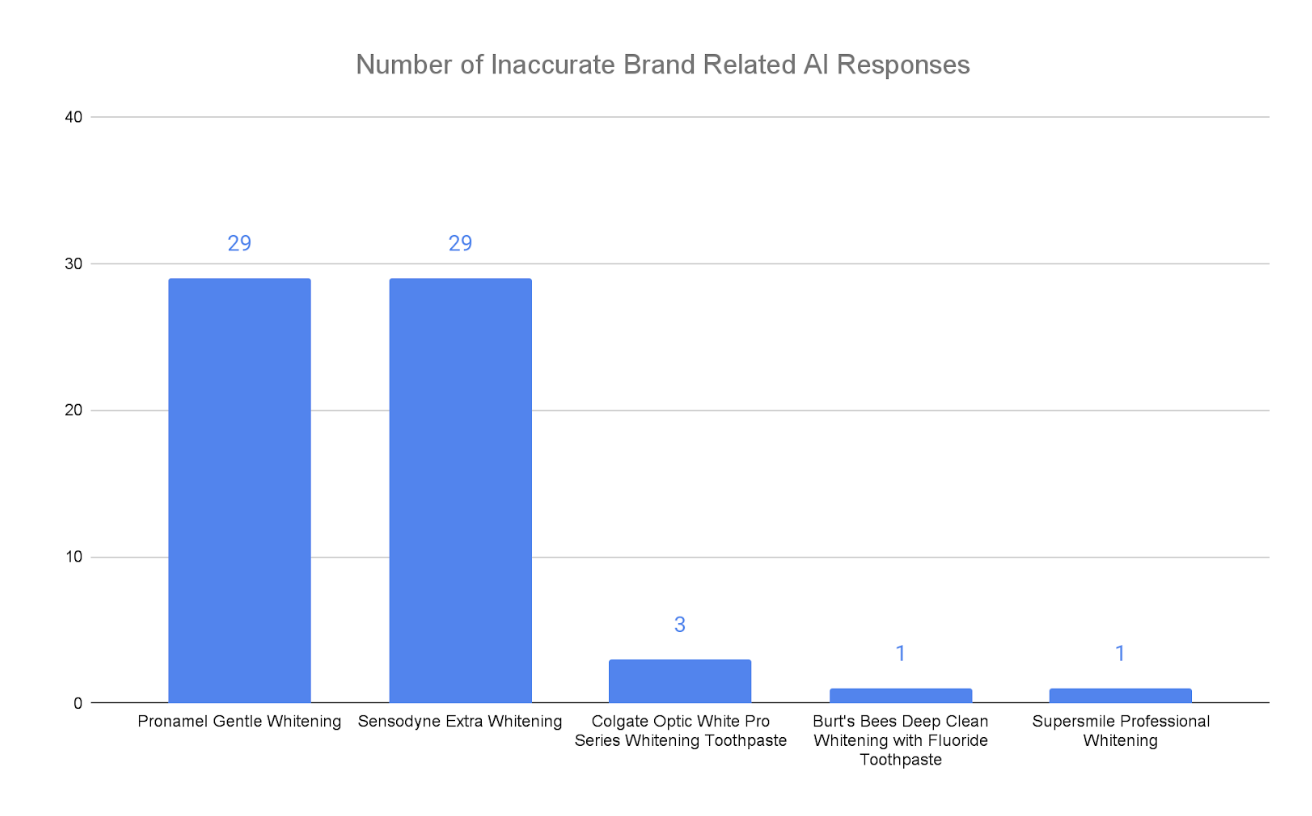
Of the 10 brands listed above, 5 brands had AI responses that contained inaccurate or misleading information. The chart below looks at the number of inaccurate AI responses by brand:
The highest percentage of inaccuracies were generated by AI platforms Claude followed by Gemini and Perplexity:
The Source of Confusion: AI Misinterprets Content
Of particular note are the inconsistencies in the portrayal of whitening capabilities for Sensodyne and Pronamel on Claude, Perplexity AI, and Gemini platforms. These platforms erroneously attributed whitening capabilities to Sensodyne and Pronamel toothpastes, specifically citing the presence of hydrogen peroxide or carbamide peroxide — ingredients heralded for their whitening properties. The AI information contradicted the actual ingredient lists of these products, as found on the product web pages, which do not contain these chemicals.
The content source identified by the Purchased AI Brand Tracker suggested that the root of this confusion traced back to AI's misinterpretation of an article from Oprahdaily.com which discussed effective whitening toothpastes in general terms. The AI systems mistakenly applied these general statements to specific products, demonstrating a critical misunderstanding of context and specificity.
Consumers rely on AI-generated content to make informed decisions about their health and purchases. For toothpaste brands, where health and cosmetic outcomes are closely intertwined, misleading information about product ingredients can lead to disappointment, misuse, or even adverse reactions.
What Actions Can Brands Take?
There are currently four steps that brands can proactively take to address inaccuracies about their brand in AI responses:
- Provide Feedback: Most platforms that host AI chatbots offer a mechanism to report or provide feedback on the responses provided. This feedback is crucial for training and improving the accuracy of the AI models. Use the feedback tool to indicate that the information was incorrect or misleading.
- Contact Support: If the misinformation is significant or has serious implications, consider reaching out directly to the support team of the AI platform. Provide them with details about the incorrect information, including the context in which the information was provided, and explain why it is inaccurate or harmful.
- Engage on Forums or Community Platforms: Some AI platforms, such as ChatGPT, have user forums or community platforms where users can discuss issues or inaccuracies. Engaging in these communities by highlighting and discussing inaccuracies can help bring attention to them and potentially expedite corrections or improvements in the AI model's training process.
- Monitor and Follow Up: After providing feedback or contacting support, keep an eye on the situation to see if the misinformation is corrected in future interactions. Continuous monitoring and follow-up may be necessary, especially if the misinformation is prevalent or particularly harmful.
The Path Forward: Monitoring and Correction
This research underscores the importance of continuous monitoring and correction of AI-generated content. The specific inaccuracies that occur can significantly impact consumer perception and decision-making. Brands that are more susceptible to misinformation need robust tools to detect and address inaccuracies promptly.
For more information on how Purchased's AI Brand Tracker can help you automate the monitoring and correction of AI-generated brand content, get in touch with us.
More Case Studies
The AI Visibility Gap
Why established brands must stay visible above the fold in AI-generated results — and what happens when they don't. A controlled experiment with 604 participants reveals the true cost of displacement.
Learn More
Rethinking the Digital Pathway: Should CPG Brands Drive Traffic to Their Own Website or Retail Partners?
A meta-analysis of 16 CPG studies across six markets reveals that driving traffic to brand.com generates 44% more revenue per 100,000 shoppers than sending traffic to retailer.com — despite lower click-through rates.
Learn More
Lights, Camera, Impact: Measuring Brand Sponsorship in Streaming Content
How Purchased used a longitudinal test-and-control methodology to quantify brand and sales lift from a streaming platform holiday special sponsorship.
Learn More
Why Your Digital Campaign Analysis is Probably Wrong
Learn how your company can measure the true impact of its digital ad spend by embracing an omnichannel approach that analyzes online and offline behaviors.
Learn More